
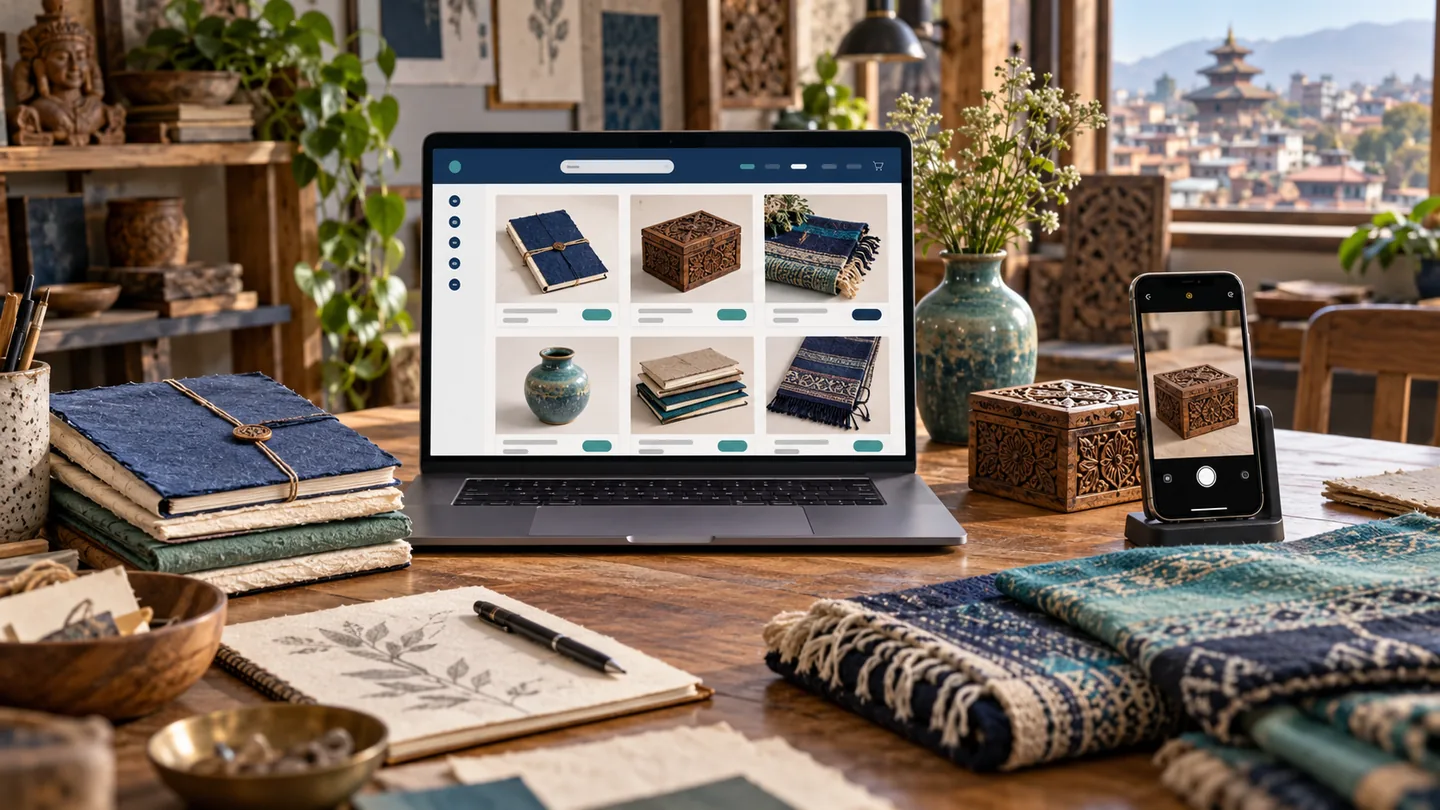
A beautiful product photograph can start a conversation. It rarely answers everything a buyer needs to know.
What size is it? Which material is used? Can the colour change? Is it available now, or made to order? What would a larger quantity involve?
For a handicraft business in Nepal, a useful digital catalogue brings those answers together. It gives buyers enough information to make a meaningful enquiry, while leaving room for details that need a personal discussion.
Start with the questions buyers actually ask
Nepal's Trade and Export Promotion Centre lists handicrafts ranging from handmade paper and woodcraft to metalwork, textiles and jewellery. These products have different information needs. A generic product page is unlikely to explain all of them well. Source: TEPC handicraft overview
Look at your last few enquiries. For handmade paper products, repeated questions might concern dimensions, paper weight and printing options. For woodcraft, they could be about material, finish and approximate dimensions. Textile buyers may need composition, care instructions and available colourways.
Turn those questions into fields your team can update consistently.
Give products stable names and codes
“The blue one from yesterday's post” is easy to misunderstand. Assign a simple product code and show it on the website, quotation and internal order record.
Keep related variations together. Buyers should be able to tell whether a photograph shows another colour, another size or an entirely different product.
If handmade production leads to small differences between pieces, explain them. Use measured information where possible, and avoid unsupported claims about materials, certification or origin.
Show scale as well as detail
Plan a small set of useful photographs: the whole product, a close-up of the finish, another angle and a view that helps explain its size. Consistent lighting and backgrounds help the catalogue feel like one collection.
A styled photograph can show how a product might be used. Include accurate product views alongside it. Compress images for mobile viewing and write image descriptions that explain the item.
Distinguish ready stock from made-to-order work
A catalogue does not have to offer immediate online purchase. For customised or wholesale work, a structured enquiry may be a better fit.
Show whether an item is ready stock, made to order or a sample of previous work. State minimum quantities only where they apply. Explain that the final production schedule depends on the confirmed specification and capacity.
For international enquiries, ask for the destination country and quantity. Shipping, taxes and any export requirements need separate confirmation. Do not imply that every product can automatically be sent everywhere.
Make enquiries easy to answer
Attach the product code to the enquiry automatically. Ask for quantity, requested variations, destination and any important date. Leave room for a short note.
Send enquiries to one agreed place and assign someone to respond. A tidy catalogue will not solve missed follow-ups unless the internal process is clear.
Choose languages around your intended buyers. English may suit some international conversations; Nepali content may help local buyers. If you publish both, decide who checks translations and keeps specifications aligned.
Begin with one collection
Choose a small collection that represents your work well. Prepare the photographs and specifications, test the pages on a phone, then ask someone unfamiliar with the products to make an enquiry.
Notice what they cannot understand without your help. Those gaps are your next edits. Expand the catalogue once the first collection is easy to maintain.
Where AWKASA can help
AWKASA can help organise catalogue structure, design product pages and build enquiry forms through our Web Design and Web Development services for Nepal.
Graphic Design can help create a consistent visual style across the website and product sheets. You supply and approve the product facts; we help present them clearly.
A catalogue is a tool for better conversations, not a guarantee of sales. Start with products you can explain and fulfil confidently, then tell us what buyers need to see.